Two Years at Vercel
Mar 12, 2026 (6mo ago)
Two years ago I joined Vercel as a Senior Marketing Operations Manager. Today my title doesn't fully capture what the role has evolved into. That's the most exciting part.
Over the past two years I've watched the scope of marketing operations change dramatically. AI and automation are making it possible for small ops teams to build internal tools and agents that previously would have required engineering resources.
A quick visual timeline
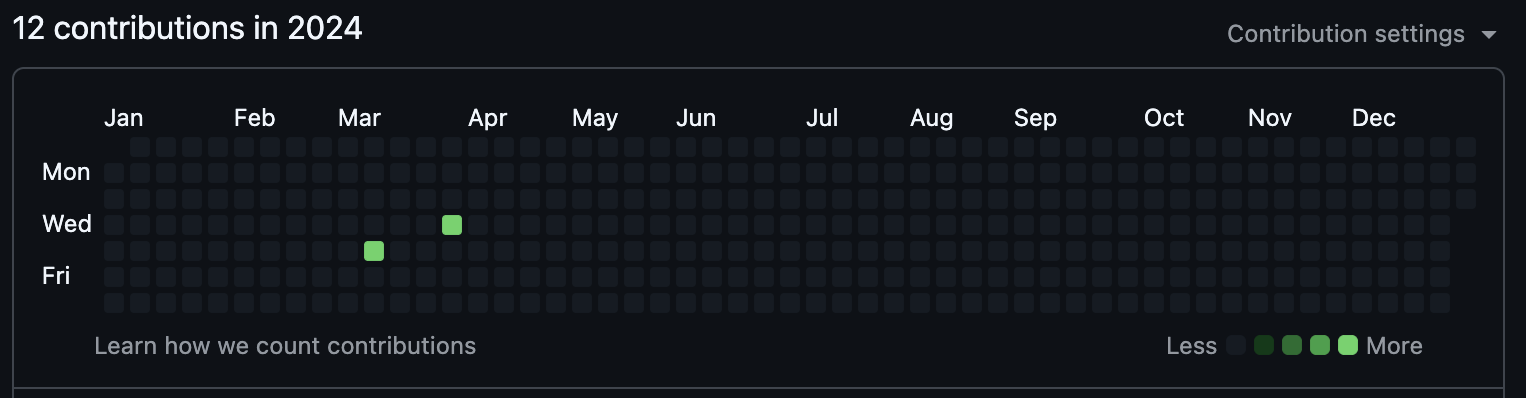
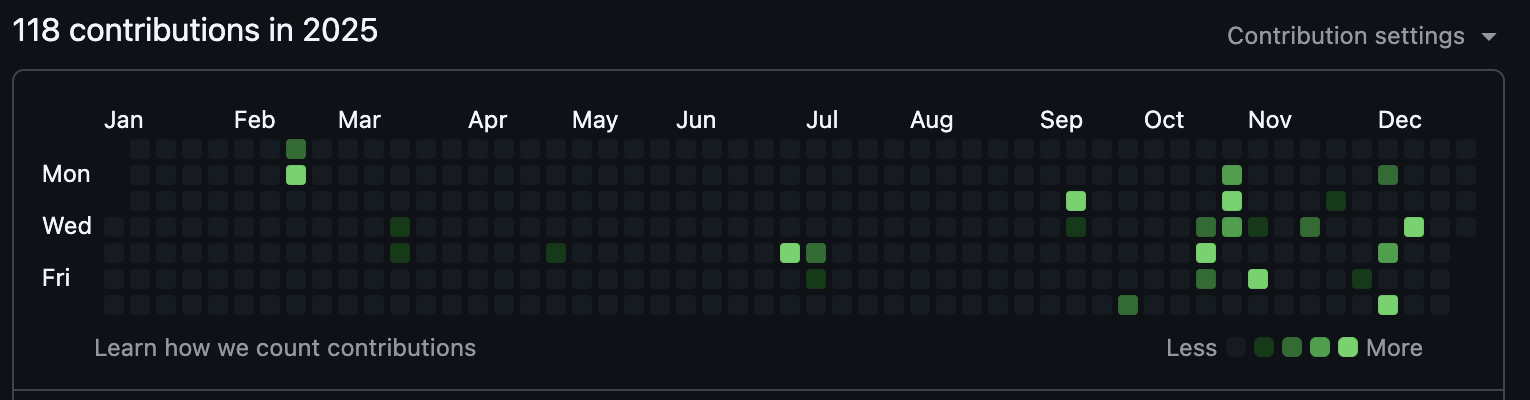
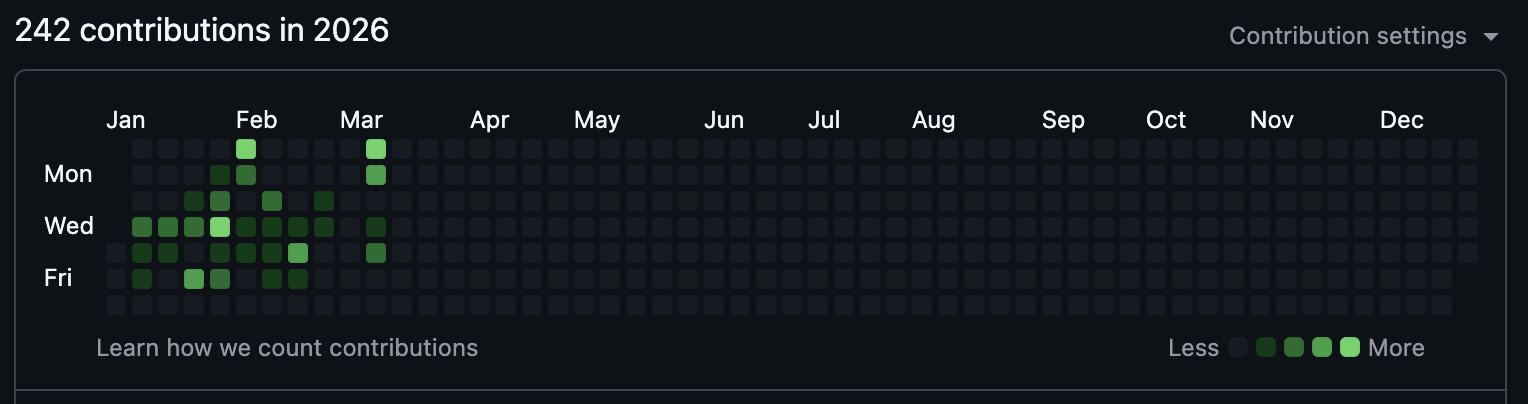
One small way this shift shows up is in my GitHub contributions over the past two years.
2024 — first commits during Vercel onboarding
2025 — experimenting and starting to build internal tools
2026 — building tools and agents more consistently
Year one: building the foundation while the house was on fire
Early on I worked alongside Bruno, and that partnership was key to getting things off the ground. But for a stretch I ended up being the solo MOPs person. I was running a heavy campaign ops workload and simultaneously migrating us to a brand new marketing automation platform.
If you've ever done a MAP migration, you know that's a full-time job on its own. Doing it while keeping the lights on for a fast-growing GTM team was a lot. But it forced me to be scrappy, prioritize ruthlessly, and build systems that could scale without me touching everything.
Then Joe joined, right in time for the migration. Having a true partner who shared the vision for what ops could become changed everything. That first year was a ton of impactful work: the migration, lifecycle programs, Salesforce cleanup, and getting our Tray.io automations to a place where the team actually trusted the data flowing through them. Joe and I eventually presented that whole journey together at MOPs Spring Fling.
Ethan coming on board added even more fuel. Suddenly we weren't just keeping up. We were building ahead.
The groundwork mattered. But year two is where things really took off.
Building things I never expected to build
Somewhere in the past year, the job expanded. Maintaining systems is still part of the work, but we also started building products: real, production-grade tools that our GTM team uses every day.
The Lead Agent came right at the start of year two. GTM Engineering built the agent itself. When a lead submits a contact form, it researches the prospect, qualifies them, and drafts a personalized email. We built the Tray.io orchestration layer that structures context, calls the agent, and pushes the outputs to Salesforce and Outreach. SDRs review the outputs in Outreach and hit send. The shift from manual research and qualification to reviewing AI-generated work cut the inbound SDR team significantly.
The List Import Agent was the first one I built myself. Anyone in MOPs knows the pain: a CSV lands in your inbox, columns are wrong, data is messy, and you're spending 30-60 minutes cleaning it up before it ever touches your CRM. I built an AI agent that handles the entire process as a repeatable pipeline: validation, normalization, deduplication, and error handling. I wrote about it in more detail on the blog, but the short version is that it cut list import time by ~90%.
More recently, we shipped the AO (Auto Outbound) Agent. The AO Agent takes qualified leads, generates personalized outreach using campaign context and prospect research, and drops the drafts into Outreach sequences for human review. Early results are positive and above benchmarks.
We also shipped mOperator, a Slack-based agent that handles a lot of the campaign ops workload: creating Salesforce campaigns, tying into the List Import Agent, and more. Small wins compound.
Standing on a stage I didn't expect
I mentioned Spring Fling earlier. Presenting with Joe on the main stage in front of hundreds of marketing ops practitioners was one of my favorite moments of the past two years.
If you'd told me when I started at Vercel that I'd be up there talking about our systems and composable stack, I would've been skeptical. But the work demanded it. When you're shipping things that change how a function operates, you should share what you're learning.
The best part wasn't the stage itself. It was the conversations afterward. People are hungry to understand how ops roles can evolve beyond the admin work.
The role is transforming fast
Here's what I keep coming back to: the MOPs/RevOps role as we've known it is changing fast.
Not the function. The function is more important than ever. But the day-to-day is already starting to look very different.
AI didn't just add another tool to the toolkit. It changed what's possible for a small team to own. I went from managing workflows in a marketing automation platform to building AI agents and shipping internal apps. I don't write code. AI writes code for me. But I'm shipping things that run in production.
The line between "operations" and "engineering" is starting to blur.
And that operational foundation still matters. Understanding lifecycle design, lead routing, attribution, campaign architecture, and how data moves across the GTM stack is what makes these systems work in the real world.
The tools may be changing, but the core marketing operations knowledge is still the thing everything else builds on.
The best ops people I know have always been systems thinkers. Now we have tools that let us act on that thinking at a completely different scale.
What's next
I'm two years in and more energized than when I started. The projects in the pipeline are bigger and more ambitious than anything I've worked on before.
If you're in MOPs or RevOps and it feels like the ground is shifting under you, you're not imagining it. The role is changing quickly.
A lot of operators are quietly making this same shift right now.
My advice: start building.
The gap between "I configure tools" and "I build tools" has never been smaller.
Here's to year three.